
asianprimenews
Breaking NewsGeneralPublic Interest

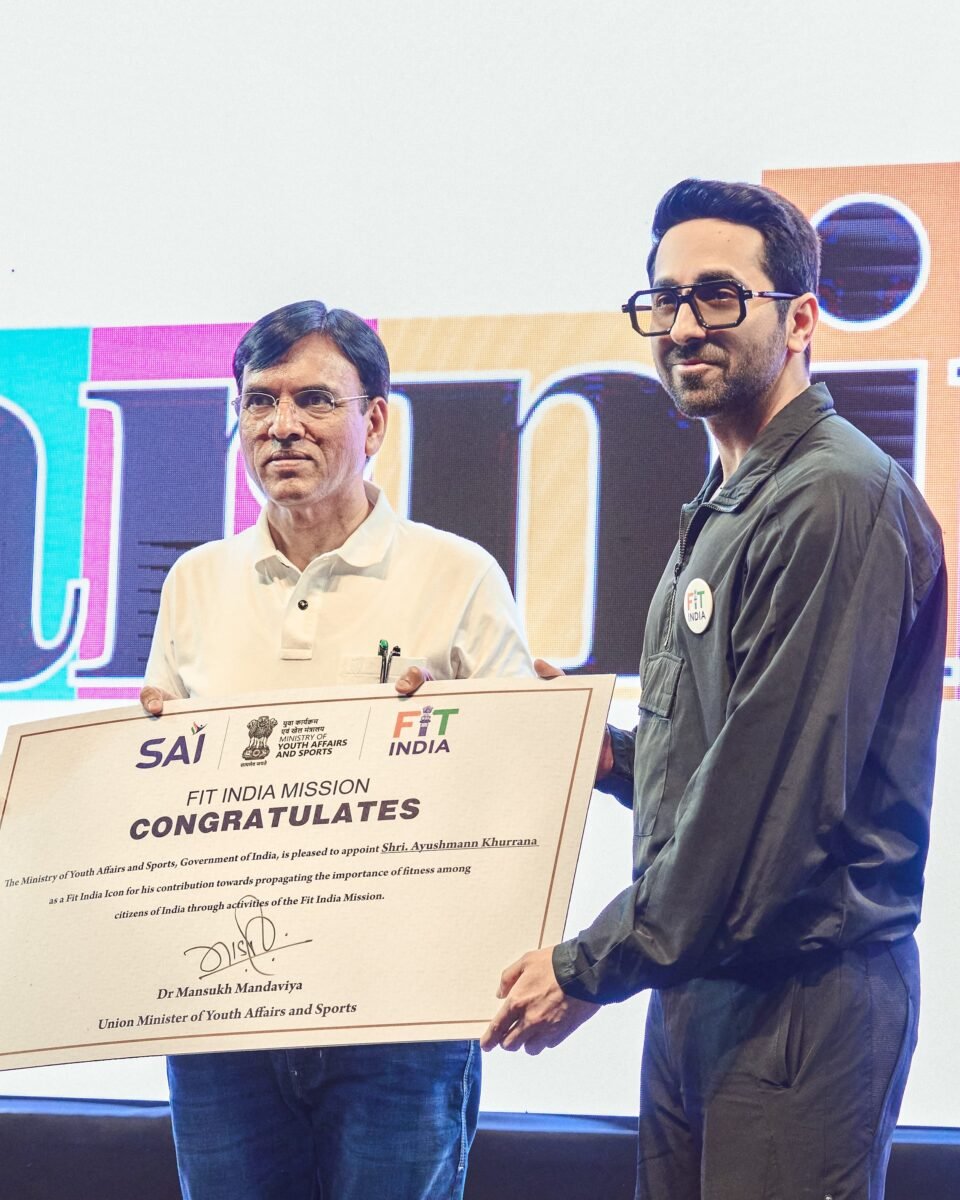
Ayushmann Khurrana named Fit India Icon by Union Sports Minister Mansukh Mandaviya, joins PM Modi’s Fit India Movement to inspire people to focus on their fitness & wellbeing!

Youth icon Ayushmann Khurrana has been named the official Fit India Icon by Union Sports Minister Mansukh Mandaviya. The actor joins PM Narendra Modi’s Fit India Movement, which aims to make fitness an integral part of daily life in India and to promote physical fitness as a fundamental aspect of our everyday lifestyle.

Ayushmann Khurrana was officially named the Fit Icon at the Fit India Movement’s inaugural ceremony in Delhi on Sunday where he was felicitated by the Union Minister.

The Bollywood star, known for his impactful roles and strong connection with the youth, is determined to inspire millions of Indians to embrace fitness with enthusiasm and dedication, encouraging people from all walks of life to prioritize their health and well-being.

The Fit India Movement is dedicated to fostering a culture of fitness through various initiatives and events. Its core objectives include promoting fitness as easy, fun, and free by showcasing simple and enjoyable ways to incorporate physical activity into daily routines, eliminating barriers to fitness. The movement will also spread awareness about fitness by highlighting various physical activities and educating citizens about the numerous benefits of staying active. Additionally, it aims to encourage the revival and promotion of traditional Indian sports, celebrating our rich cultural heritage while advancing physical fitness.

Ayushmann Khurrana said, _“When your health is good, the challenges in life—whether personal or professional—seem manageable. But when your health is compromised, it becomes the only challenge that matters. Good health empowers us to do anything. A healthy individual is capable, confident, and resilient—even when the world around them feels uncertain. Health truly is everything. A healthy nation is a wealthy nation. When we are healthy, we are more productive, more prosperous and contribute to nation-building. I sincerely thank the Honourable Prime Minister, Shri Narendra Modi ji for this incredible initiative. I also extend my gratitude to Union Sports Minister Dr. Mansukh Bhai for his creative ways in advancing this national movement. I am deeply honoured to be named a Fit India Icon. Finally, I offer my blessings to the younger generation and to our great nation—a blessing of long life – Ayushman Bhava.”_

Praising Ayushmann Khurrana, the Union Sports Minister Mansukh Mandaviya said, _“When celebrities like you come on this platform and give a positive message about Fit India, after hearing your words, many youngsters will get inspiration and will join the Fit India movement and stay fit. I believe if you have given someone the inspiration/ motivation to be fit, so this fit person will only help make India a developed nation and will be an ambassador of a developed India and you have successfully carried on your duties.”_

Share

Related posts

Why CML Isn’t a Solved Disease—And What Patients in India Need to Know* Over the past two decades, Chronic Myeloid Leukemia (CML) has undergone a transformation—from being a life-threatening condition to one that can be controlled with oral medication. Although survival rates have improved significantly, the idea of CML as a ‘manageable’ disease is now being questioned. Clinicians and patients alike are recognizing that the existing standard of care does not address the full picture—especially for India’s younger patient population, whose needs go far beyond survival. Dr Subhaprakash Sanyal Director of Haematology and BMT Services, Fortis Hospital, Mumbai, said, “There’s a common belief that starting treatment for CML means the journey is simple, but that isn’t the case. Many patients struggle to reach their treatment milestones as expected, and a significant portion need to change or stop their medication due to side effects or intolerance. In fact, about 30 to 40% discontinue their initial therapy within five years, highlighting that the standard approach doesn’t work for everyone.” CML disproportionately affects younger adults in India, where the median age of diagnosis is between 35 and 40 years—much younger than the average age of 50–60 in Western countries. At this life stage, patients are often building careers, supporting families, and planning long-term futures. In this context, treatment is no longer just about survival—it’s about maintaining energy, emotional well-being, professional productivity, and daily independence. Historically, the primary treatment goal in CML was achieving Major Molecular Response (MMR). But over the years, these goals have evolved. Today, physicians aim for deeper responses, particularly Deep Molecular Response (DMR). Achieving DMR paves the way for Treatment-Free Remission (TFR), where patients can potentially stop therapy altogether and remain in remission under medical supervision. These advanced milestones are particularly relevant to newly diagnosed patients, as reaching DMR within the first two years greatly improves the likelihood of achieving TFR down the line. Why So Many Patients Fall Short Despite clear treatment goals, a significant proportion fail to achieve MMR within the first year, and even fewer reach DMR by year two. One of the primary reasons is the impact of persistent, low-grade side effects—such as fatigue, joint pain, and gastrointestinal issues—which patients often tolerate silently but which meaningfully reduce their quality of life. These side effects also drive nonadherence, dose modifications, and ultimately treatment discontinuation. In fact, treatment intolerance is the leading cause of therapy discontinuation in the first two years of CML management. Adding to the complexity, current treatments—particularly ATP-competitive tyrosine kinase inhibitors (TKIs)—can affect not just the intended target but also unrelated biological pathways, causing off-target toxicity. This often leads to therapy switches, a strategy that increases both clinical and emotional burden without necessarily resolving the issue. A recent Indian analysis noted that nearly all CML patients report some form of low-grade side effect, many of which disrupt work and personal life but don’t qualify for hospitalization. As a result, patients feel caught in a difficult balance—managing a chronic illness while enduring ongoing discomfort or disruptions. The Case for Better-Tolerated, More Effective Therapies As the treatment landscape evolves, the need for therapies that not only offer deeper molecular responses but also better tolerability is becoming increasingly clear. Emerging therapies with novel mechanisms of action have begun to change the paradigm by offering comparable—or even superior—efficacy alongside fewer adverse events and lower discontinuation rates. In one international phase III trial, a newer therapy demonstrated a 74.1% MMR rate at 96 weeks, significantly higher than the 52.0% achieved by older therapies. It also showed a 54% lower risk of treatment discontinuation due to side effects, while nearly half of patients achieved MR4 and 30.9% achieved MR4.5, the deepest levels of response. These findings suggest that treatment no longer needs to be a trade-off between efficacy and day-to-day functioning. This shift is particularly important in the Indian context, where younger patients face the possibility of decades-long treatment. For them, the ability to tolerate therapy comfortably while still achieving long-term disease control is not a luxury—it’s a necessity. The Importance of Proactive Conversations Many patients continue older treatments unaware that newer, more tolerable options exist. This makes open doctor–patient conversations crucial—especially early in treatment. Patients should understand their goals, like DMR or TFR, and how their therapy aligns with them. Discussing side effects, lifestyle impact, and alternatives helps ensure care is not just effective, but sustainable and suited to their lives. While CML outcomes have improved, challenges remain—particularly for India’s younger patients. As treatment goals expand and better options emerge, the focus must shift from merely managing the disease to helping patients live well. The future of CML care lies in deeper responses, better tolerability, and enabling life beyond medication.

asianprimenews

Netizens Rave About ‘Khudaya’ The Soulful Melody from ‘Sarfira’ Featuring Akshay Kumar and Radhikka Madan

asianprimenews

IMDb Announces Most Popular Indian Movies of 2025 So Far and Most Anticipated Indian Movies: July-December 2025

asianprimenews