
asianprimenews
GeneralPublic Interest

MCA SHARAD PAWAR CRICKET MUSEUM INAUGURATED AT WANKHEDE STADIUM

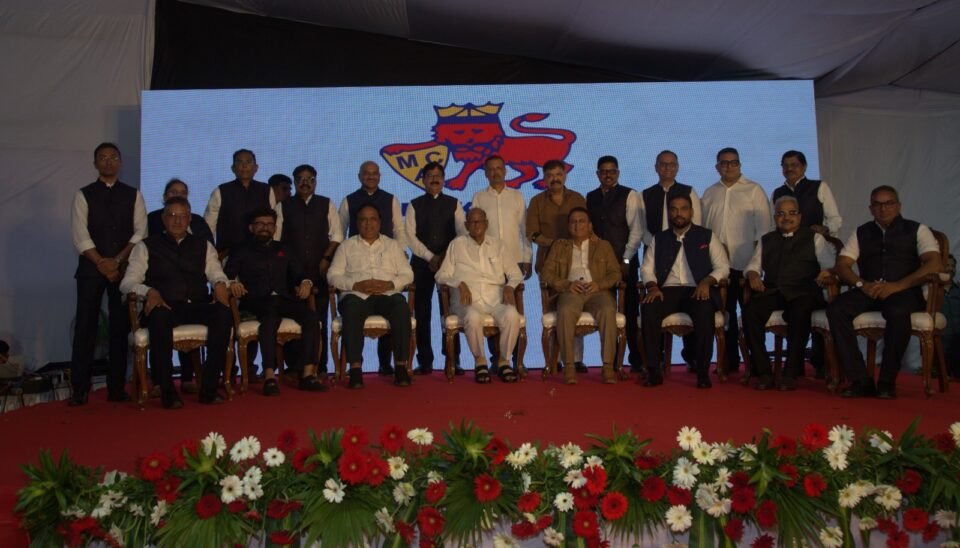
Mumbai, August 23, 2025: The Mumbai Cricket Association (MCA) proudly announced the grand inauguration of the MCA Sharad Pawar Cricket Museum today at the iconic Wankhede Stadium. Spanning over 8,000 sq. ft., this world-class museum stands as a fitting tribute to Mumbai’s unparalleled contribution to Indian and global cricket. The museum officially opened with much celebration, attended by dignitaries, cricketing legends, administrators, and members of the Mumbai cricket fraternity. Beginning September 22, 2025, the museum will be open to the public through mandatory online bookings. Ticket prices and time slots will be announced shortly.

At the grand entrance, visitors are welcomed by life-size statues of Shri Sharad Pawar and cricketing icon Sunil Gavaskar. These statues symbolize the enduring spirit of Mumbai cricket and its illustrious champions who have inspired generations. Inside, the MCA Sharad Pawar Cricket Museum offers a unique blend of physical memorabilia, interactive exhibits, and advanced digital experiences. The collection honours Mumbai’s cricketing giants through specially curated sections dedicated to India’s cricketing stalwarts, women’s cricket achievements, World Cup triumphs, administrators and their contributions, and member clubs of MCA. From historic memorabilia to audio-visual experience centre, the museum blends nostalgia with innovation, offering an immersive journey through the city’s cricketing heritage.

The highlight of the museum is a priceless collection of rare and iconic memorabilia gifted by Mumbai’s legendary cricketers, showcasing the rich legacy of Mumbai cricket and its lasting impact on Indian and world cricket.

“I am truly honoured to have this museum named after me. Mumbai’s cricketing journey – from its maidans to the global stage – is a story of talent, dedication and passion. This museum celebrates that rich legacy and the many unsung heroes who have worked behind the scenes to support and grow the sport. I hope it continues to inspire future generations to carry forward the proud spirit of Mumbai cricket,” said Sharad Pawar, Member of The Rajya Sabha

Former Captain of The Indian Cricket Team Sunil Gavaskar said, “I must say I’ve always considered myself a student of cricket history. In our playing days, there were no videos – only books and magazines. We learned from reading, from autobiographies, and from the written word. That’s why seeing this museum makes me genuinely happy. MCA has done a wonderful job, not just for Mumbai cricket but for Indian cricket as a whole. Young players who visit will find inspiration in the stories and history preserved here.

Gavaskar added, “For years, I felt a museum was needed to showcase our rich cricketing heritage, and MCA has brought that vision to life in a commendable way. What makes it even more special is the digital presentation – because while we don’t have old videos, technology now allows us to recreate and present cricket from the days before television. This way, future generations can connect with and learn from the game’s glorious past.”

MCA President Ajinkya Naik.said, “As President of the Mumbai Cricket Association, I am proud that the statues of two Masters – Sharad Pawar Saheb and Sunil Gavaskar Sir – now stand as a source of inspiration for generations to come. Sharad Pawar Saheb, the master of administration, has with his visionary leadership taken MCA, BCCI, and ICC to greater heights. Sunil Gavaskar, the Little Master, through his runs, grit, and historic contribution to Indian cricket, has defined an era and inspired countless cricketers. Both legends embody excellence, dedication, and commitment, and their presence here will continue to guide and motivate youngsters towards greatness in cricket and beyond.”

“Kudos to MCA for creating this museum and for making it digital as well. This will give a new identity to the rich history of Wankhede on the global stage. Just as we are always amazed by the museum at Lord’s and the way they have preserved cricket’s heritage, this museum will be an equally important step for MCA. Congratulations to the MCA team for making this vision a reality,” said Ashish Shelar, Cabinet Minister, Govt. of Maharashtra

The MCA invites all cricket enthusiasts and the public to discover and celebrate Mumbai’s cricketing legacy at the MCA Sharad Pawar Cricket Museum from September 22, 2025 onwards.

Share

Related posts

Biggg News: Action Superstar Tiger Shroff to headline Neerja director Ram Madhvani and Mahaveer Jain’s grand, SPIRITUAL action thriller designed for a global audience* Mega Action Star *Tiger Shroff* has bagged the film and he’ll be seen in a never-seen-before avatar. Directed by *Ram Madhvani,* Produced by *Mahaveer Jain Films* and *Ram Madhvani Films,* it’s a spiritual action thriller. This has never been attempted before in Indian cinema. Source says it has an appeal and huge potential for a global audience and not just the moviegoers of the Indian diaspora.” The source continued, _“Tiger Shroff will be undergoing extensive preparation for this ambitious film. It will go on floors in the second quarter of 2026. A major portion of the film will be shot in Japan. At present, the makers are in the process of finalizing the leading actress and another powerful actor for the role of the antagonist.”_ The source also revealed, _“Tiger Shroff is extremely excited about the film as it’ll present him in a new light. Ram Madhvani and Mahaveer Jain are also exhilarated about the project; they, along with their core team, right now are working on the first look. It is expected to be unveiled soon, along with the official announcement.”_ Ace film-maker Ram Madhvani is best known for the National Award-winning Neerja (2016) starring Sonam Kapoor, the thriller Dhamaka (2021) with Kartik Aaryan, and the internationally acclaimed, Emmy-nominated series Aarya featuring Sushmita Sen. Meanwhile, Mahaveer Jain has collaborated on notable projects like Uunchai (2022) with Rajshri Productions, the upcoming Kartik Aaryan starrer Naagzilla with Karan Johar and Mrighdeep Singh Lamba, International thriller White with Siddharth Anand and Vikrant Massey as Gurudev Sri Sri Ravi Shankar, and Sooraj Barjatya’s upcoming film Yeh Prem Mol Liya, starring Ayushmann Khurrana and Sharvari.

asianprimenews

*5 Times Alizeh Slayed in a Black Outfit*

asianprimenews

Why CML Isn’t a Solved Disease—And What Patients in India Need to Know* Over the past two decades, Chronic Myeloid Leukemia (CML) has undergone a transformation—from being a life-threatening condition to one that can be controlled with oral medication. Although survival rates have improved significantly, the idea of CML as a ‘manageable’ disease is now being questioned. Clinicians and patients alike are recognizing that the existing standard of care does not address the full picture—especially for India’s younger patient population, whose needs go far beyond survival. Dr Subhaprakash Sanyal Director of Haematology and BMT Services, Fortis Hospital, Mumbai, said, “There’s a common belief that starting treatment for CML means the journey is simple, but that isn’t the case. Many patients struggle to reach their treatment milestones as expected, and a significant portion need to change or stop their medication due to side effects or intolerance. In fact, about 30 to 40% discontinue their initial therapy within five years, highlighting that the standard approach doesn’t work for everyone.” CML disproportionately affects younger adults in India, where the median age of diagnosis is between 35 and 40 years—much younger than the average age of 50–60 in Western countries. At this life stage, patients are often building careers, supporting families, and planning long-term futures. In this context, treatment is no longer just about survival—it’s about maintaining energy, emotional well-being, professional productivity, and daily independence. Historically, the primary treatment goal in CML was achieving Major Molecular Response (MMR). But over the years, these goals have evolved. Today, physicians aim for deeper responses, particularly Deep Molecular Response (DMR). Achieving DMR paves the way for Treatment-Free Remission (TFR), where patients can potentially stop therapy altogether and remain in remission under medical supervision. These advanced milestones are particularly relevant to newly diagnosed patients, as reaching DMR within the first two years greatly improves the likelihood of achieving TFR down the line. Why So Many Patients Fall Short Despite clear treatment goals, a significant proportion fail to achieve MMR within the first year, and even fewer reach DMR by year two. One of the primary reasons is the impact of persistent, low-grade side effects—such as fatigue, joint pain, and gastrointestinal issues—which patients often tolerate silently but which meaningfully reduce their quality of life. These side effects also drive nonadherence, dose modifications, and ultimately treatment discontinuation. In fact, treatment intolerance is the leading cause of therapy discontinuation in the first two years of CML management. Adding to the complexity, current treatments—particularly ATP-competitive tyrosine kinase inhibitors (TKIs)—can affect not just the intended target but also unrelated biological pathways, causing off-target toxicity. This often leads to therapy switches, a strategy that increases both clinical and emotional burden without necessarily resolving the issue. A recent Indian analysis noted that nearly all CML patients report some form of low-grade side effect, many of which disrupt work and personal life but don’t qualify for hospitalization. As a result, patients feel caught in a difficult balance—managing a chronic illness while enduring ongoing discomfort or disruptions. The Case for Better-Tolerated, More Effective Therapies As the treatment landscape evolves, the need for therapies that not only offer deeper molecular responses but also better tolerability is becoming increasingly clear. Emerging therapies with novel mechanisms of action have begun to change the paradigm by offering comparable—or even superior—efficacy alongside fewer adverse events and lower discontinuation rates. In one international phase III trial, a newer therapy demonstrated a 74.1% MMR rate at 96 weeks, significantly higher than the 52.0% achieved by older therapies. It also showed a 54% lower risk of treatment discontinuation due to side effects, while nearly half of patients achieved MR4 and 30.9% achieved MR4.5, the deepest levels of response. These findings suggest that treatment no longer needs to be a trade-off between efficacy and day-to-day functioning. This shift is particularly important in the Indian context, where younger patients face the possibility of decades-long treatment. For them, the ability to tolerate therapy comfortably while still achieving long-term disease control is not a luxury—it’s a necessity. The Importance of Proactive Conversations Many patients continue older treatments unaware that newer, more tolerable options exist. This makes open doctor–patient conversations crucial—especially early in treatment. Patients should understand their goals, like DMR or TFR, and how their therapy aligns with them. Discussing side effects, lifestyle impact, and alternatives helps ensure care is not just effective, but sustainable and suited to their lives. While CML outcomes have improved, challenges remain—particularly for India’s younger patients. As treatment goals expand and better options emerge, the focus must shift from merely managing the disease to helping patients live well. The future of CML care lies in deeper responses, better tolerability, and enabling life beyond medication.

asianprimenews